March 21
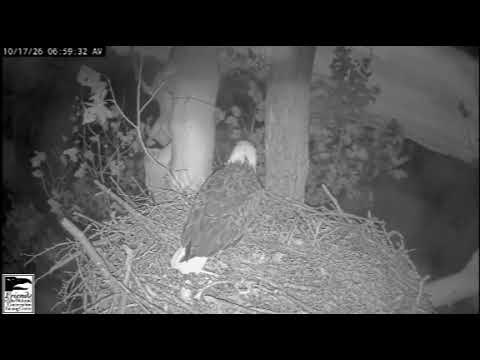
Over the weekend, we were able to confirm the presence of a third adult eagle near the nest, and we are almost certain that it is a breeding age female. Typically, the presence of a new female means she is competing with the established pair of eagles for the current nest. Nest competition is a common occurrence in areas with healthy eagle populations, meaning the total population of eagles near NCTC has likely increased in recent years.All I can add to this is to thank you for your concern, passion and understanding that intervention in this episode was not the right thing to do. Things don't always work out the way we'd like in nature, but I think we would all agree that we have gotten a rare glimpse, these past few days, into the world of bald eagles that most people do not see or will ever know about. The fact that we have competition such as this is speaks well for the recovery of the Bald Eagle, a species that was nearly extinct fifty years ago.
We have also confirmed multiple sightings of the male eagle who is part of the established breeding pair. The male does not appear to be injured, and appears to be in good health. The eaglet which hatched on March 17th has died and the remaining egg is not likely to hatch given that it is not being regularly incubated by the parents.
We do have biologists on staff here at NCTC who have been offering their expert assessments of the situation. In addition, our land manager has been communicating with another raptor biologist based in our Chesapeake Bay field office. There is general agreement among our biologists that if the new female eagle is successful in chasing off the current female, the new female will then need to recruit a male to join her. However, it is likely too late in the nesting season for success in laying, incubating and hatching any new eggs.
You may wonder why there is competition over this nest - and there are several potential factors. Eagles prefer to nest in the tops of large trees located near rivers, lakes, and other wetlands. The NCTC nest is located very close to the Potomac River, which is a plentiful source of fish for nesting eagles to hunt. In addition, eagle nests represent a considerable investment of effort to construct: they can be up to 10 feet in diameter and weigh up to 2,000 lbs. And finally, as mentioned above, nest competition frequently occurs in areas with a significant eagle population.
New thread.